In the fold: a decluttering genius reimagines the everyday drawer
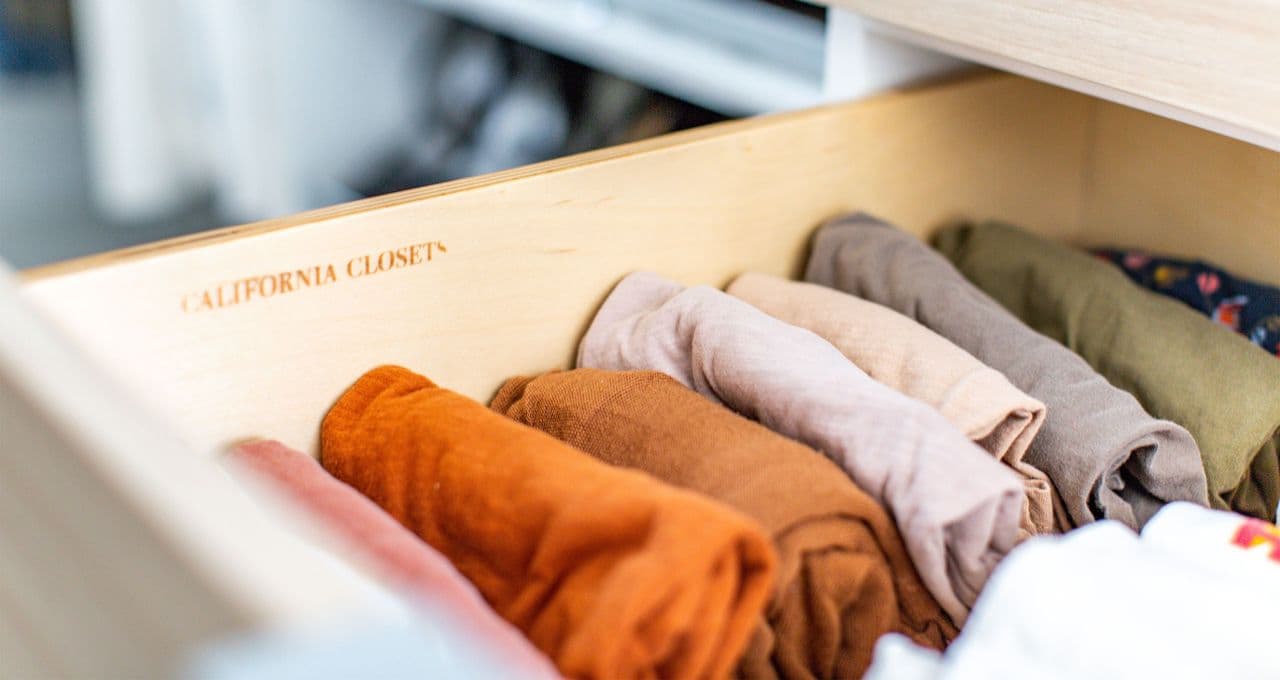
Luckily, the solution to this problem lies in your folding technique. In her book, The Life-Changing Magic of Tidying Up, organization expert Marie Kondo outlines a simple, easy-to-understand folding method that may change your drawers forever.
Here are some of her key tricks to incorporate into your own life so you never have to see a messy drawer again.
Before you begin, remove your drawer’s contents and evaluate the end result. Would you like the items organized by color? By texture? Or by type? You may even want a combination of these options. Knowing your proposed end result is an important road map when reimagining a drawer.

Kondo encourages you to stop storing items on top of one another. While her way of folding (detailed below) might sound like it would cause wrinkling because you’ll be making more folds than you likely do now, she explains that it’s not the number of folds that cause clothing to crease — it’s the weight. If you stack six shirts in a drawer, the bottom one will be the most in need of ironing from the weight of the other five. Piles also force you to dig through your items, which can lead to drawer chaos and rumpled garments.
The right way to fold, according to Kondo, is to make a thick rectangular shape with every garment. You can apply this method to socks, underwear, T-shirts, pants, etc. Using a shirt as an example, you would first lay it flat, upside down. Then, fold both sides inward one-third of the way, tucking the sleeves in after. Then, fold across the center of the shirt, in thirds. (This handy video shows Kondo performing this technique so you can see it in action.)
https://www.youtube.com/watch?v=19i7oyiKVG0
As you fold your items, place them side by side in the drawer. Ideally, after folding, each garment should stand at the same height as your drawer so that it won’t get caught and will stay up on its own. When each piece of clothing stands on its own, you’ll be able to see everything in the drawer at a glance.

